
Find Your Home in Connecticut
Connecticut is part of a dynamic ecosystem that includes some of the top life sciences clusters in the country, anchored by a robust ecosystem of cutting-edge research, highly educated workforce, and innovative companies. Connecticut has become a nucleus of life science advances, including groundbreaking therapeutic research and development and the latest medical device technology. From the creation of the artificial heart to stem cell study to genomic research, Connecticut continues to demonstrate its commitment to serving as the center for biomedical advances.
How Can We Help Your Business?
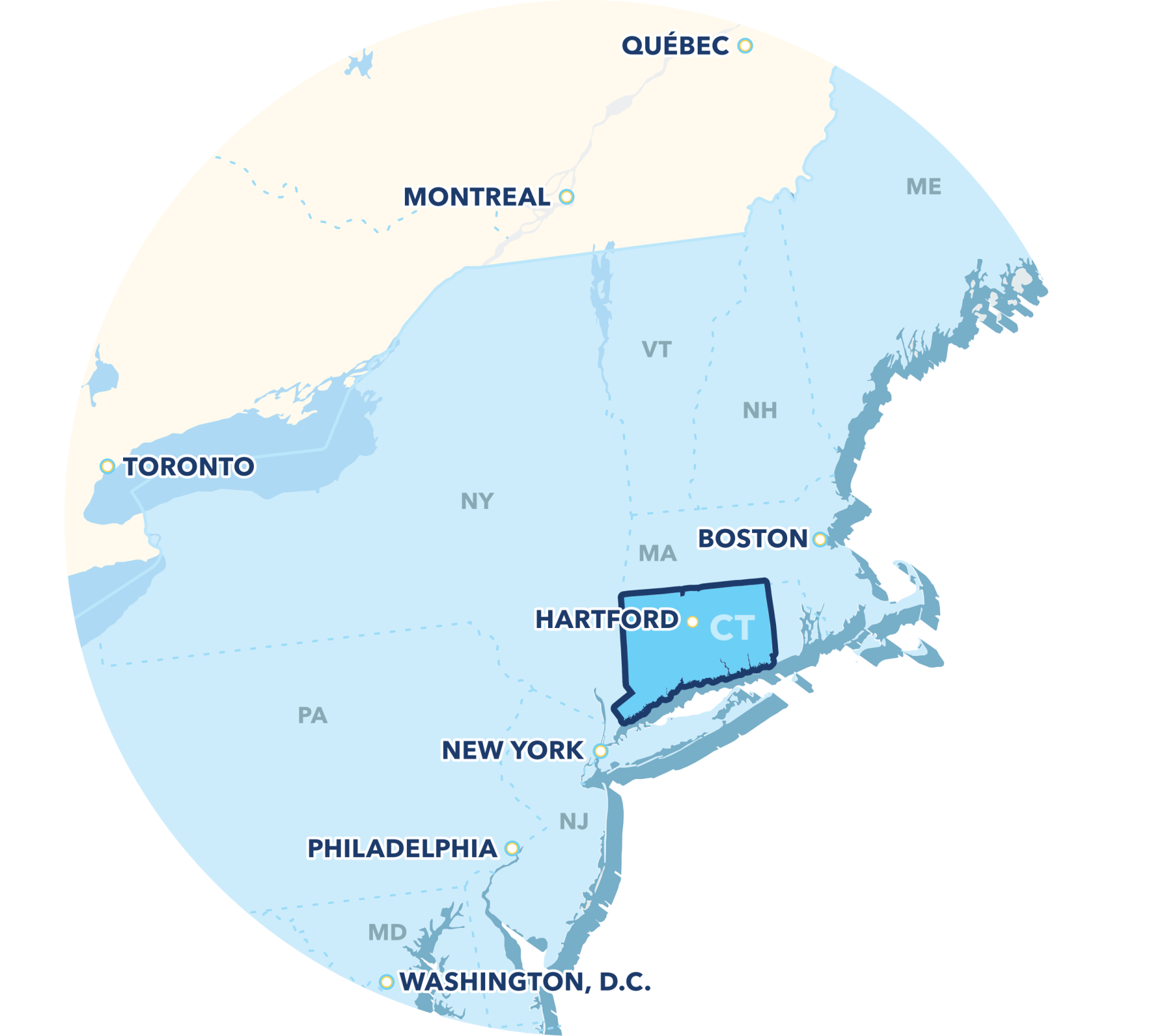
Connecticut Offers Proximity & Access
Positioned in the epicenter of the Northeastern U.S., Connecticut offers businesses an ideal location adjacent to New York, within two hours of Boston, 800 kilometers of nearly one-third of the U.S. economy1, and two-thirds of the Canadian economy2.
Connecticut offers one of the nation’s most highly educated, highly productive workforces in the world, on par with world-leading nations including Switzerland, Qatar, and Singapore. Our compact geography allows for better accessibility to state and local government and industry associations. Coupled with a top-rated education and childcare system, and better affordability compared to major cities and our Northeast neighbors, Connecticut makes the ideal place to live, work, and grow a business.
Connecticut is home to more than 1,500 life sciences establishments1 that employ over 25,000 people2 in the state, contributing to Connecticut's status as the state with the 9th highest STEM employment concentration in the U.S.3 This STEM workforce is one of the most highly skilled and educated in the nation, with Connecticut's workers boasting the 7th highest percentage of science, engineering, & health doctorates4 in the country.
This talent has resulted in a wide array of innovative companies growing in Connecticut, like pharmaceutical giant Pfizer, who employs thousands and operates a key facility focusing on research and development and the manufacturing of biopharmaceuticals that plays a pivotal role in advancing vaccine and drug development efforts, most notably the COVID-19 vaccine.
“Connecticut’s universities are great engines of innovation. Those ideas attract capital, both from the private sector and public sector. Together, with Connecticut’s talent pool, those are the three ingredients for a successful bioscience company.”
— Craig Crews, Founder of Arvinas
Connecticut's Cost Advantage
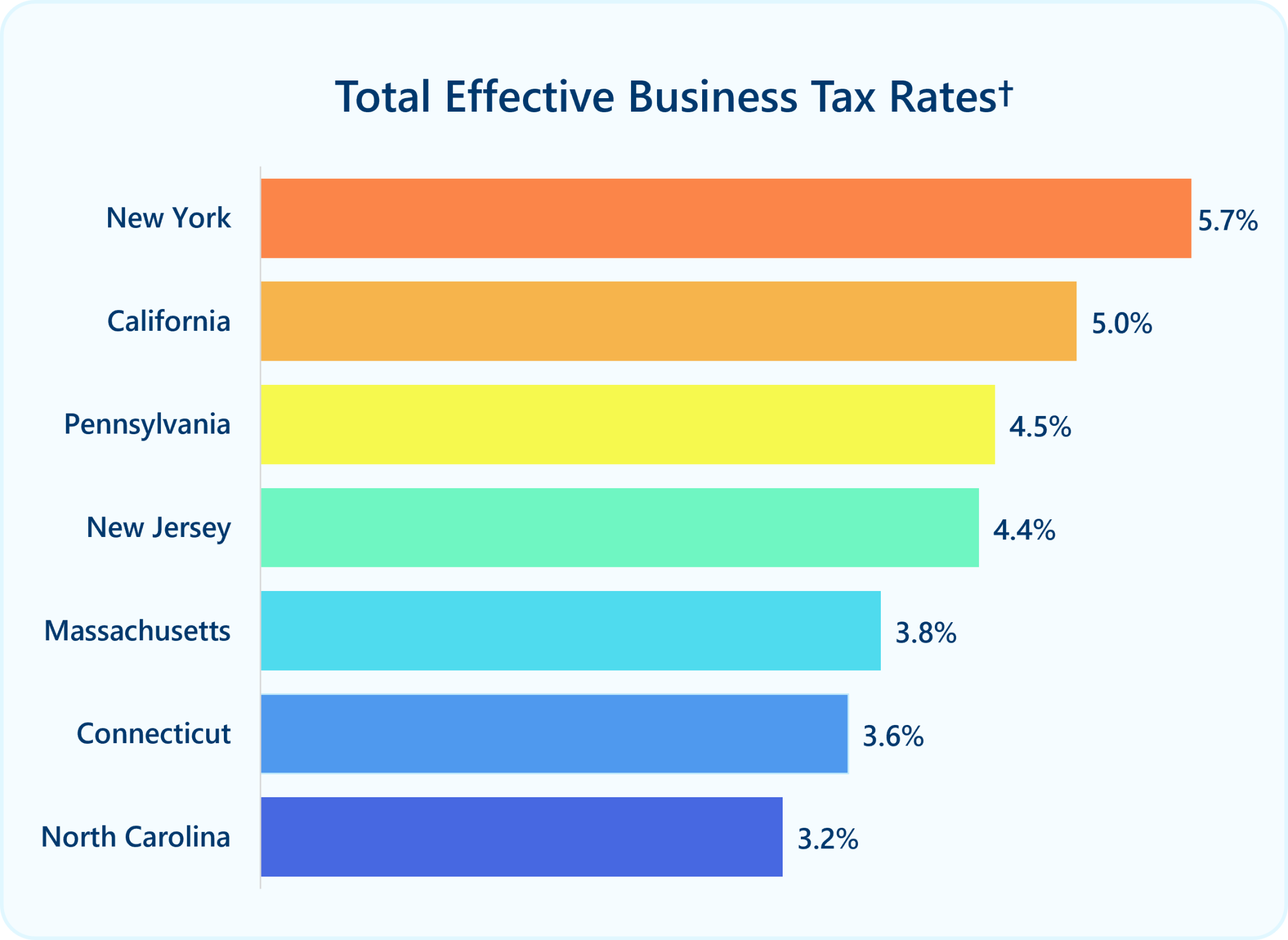
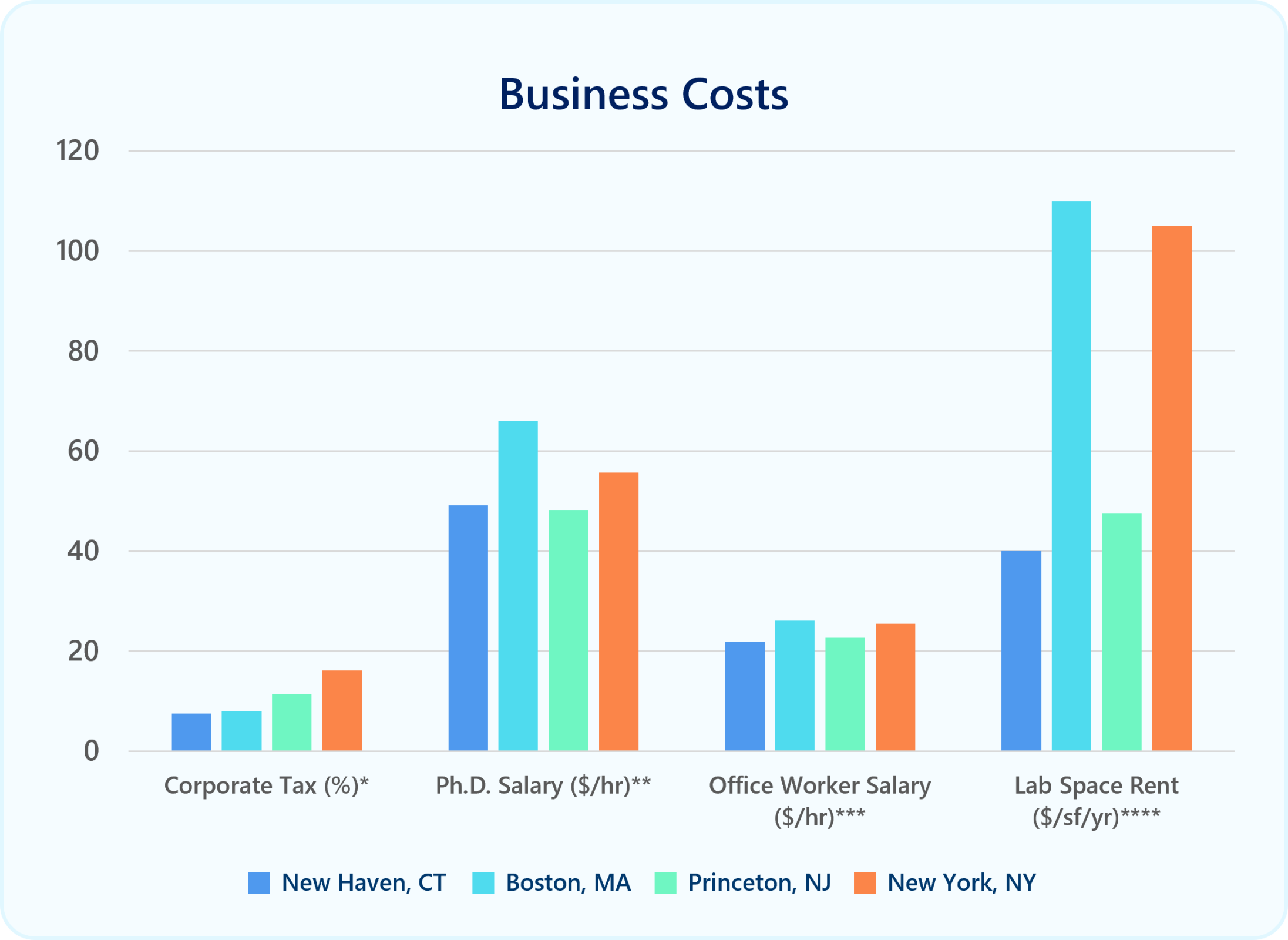
Connecticut offers a clear cost advantage for life sciences companies over major U.S. hubs, allowing more strategic use of capital. Lower expenses across talent, facilities, and taxes help extend runway, increase investment in R&D, and support scalable growth. For international firms, this creates a more efficient path to market—enabling them to establish operations, hire skilled talent, and access lab space without overcommitting resources. Instead of spending heavily on overhead, companies can focus on innovation, clinical progress, and commercialization, making Connecticut an efficient U.S. entry point. In contrast to saturated markets, Connecticut provides a more collaborative and accessible ecosystem. Companies benefit from direct access to decision-makers, strong partnerships with academic and research institutions, and a supportive network. This environment not only reduces costs but also accelerates traction, visibility, and growth in a market with significant capacity for innovation.
Partnerships with Higher Education
Connecticut’s Life Sciences Corridor, following I-95 and I-91 from Stamford to Hartford, is more concentrated, easily accessible, and as productive as other nationally recognized bioscience hubs. Anchor cities like New Haven and Stamford, as well as Groton in the southeast, have experienced a rapid growth in life sciences companies over the last decade, with New Haven ranking #9 in the nation for life sciences growth7 and Stamford ranking #1 for 5-year job growth in physical, engineering, and life sciences R&D8. This surge is thanks in large part to the 36 world-renowned colleges and universities in the state, including Yale — the #2 university in the country1 — and the University of Connecticut (UConn), helping Connecticut rank #3 for highest percentage of adults with graduate or professional degrees4, #6 for percentage of adults with Bachelor's degrees or beyond5, and #7 for employed science, engineering, and health doctorate holders as a percentage of the workforce6.
How Can We Help Your Business?
Notable Life Sciences Employers

ABM Boehringer Ingelheim

Boehringer Ingelheim is a global pharmaceutical company based in Germany committed to improving human and animal health. With a focus on research and development, the company operates in various therapeutic areas, including oncology, immunology, and respiratory diseases. Boehringer Ingelheim has a significant presence in Connecticut, with its U.S. headquarters located in Ridgefield, CT. The site plays a crucial role in research, development, and manufacturing of innovative medicines. Employing thousands of people in the state, the company is also a key contributor to the local economy, focusing on advancing science and improving healthcare outcomes globally.

ABM Medtronic

Medtronic is a global leader in medical technology, focused on innovating life-changing therapies for a wide range of medical conditions. Medtronic’s Connecticut facility, located in North Haven, CT, is a critical part of the company's global operations, serving as a hub for the design, manufacturing, and distribution of medical devices, particularly those used in cardiovascular, diabetes, and surgical applications. The site is also involved in the production of advanced medical technologies, such as pacemakers, defibrillators, and insulin pumps, with a focus on research and development to innovate and enhance medical devices.
Be Among the Best

Key Facts

#2
for academic bioscience R&D expenditures per capita8

#3
state for biological/ biomedical science advanced degrees awarded per capita9

#3
in bioscience patents per capita10

#5
for private R&D investment per capita11
Industry Subsectors





Life Sciences Support in Connecticut
Life Sciences
- BioCT – serves as the unified voice for the bioscience community; providing event programming and networking, exclusive purchasing and savings programs, entrepreneurial and career development resources, as well as policy and advocacy initiatives
- Yale University Center for Biomedical Innovation and Technology (CBIT) — consortium of engineers, clinicians, scientists, innovators and entrepreneurs to help incubate, support, implement, and potentially bring to market novel technical approaches to address under-met clinical needs
- Connecticut Innovations (CI) — Connecticut’s strategic venture capital arm and the leading source of financing and ongoing support for innovative, growing companies
- CONNSTEP — a business consulting firm focused on identifying opportunities for growth, improving productivity, and ensuring competitiveness
Life Sciences Sector Snapshot

◄ Get an in-depth look at Connecticut’s life sciences industry cluster.
- industry trends and dynamics
- concentrations of talent and workforce pipelines in Connecticut
- Connecticut's regulatory environment
- logistical and infrastructure considerations
- the state’s strengths for companies in the state
- data and resources for companies seeking market entry into Connecticut
Learn more about Connecticut's key industries in our detailed snapshots.
1Lightcast, 2023; AdvanceCT calculations; 2Lightcast, 2023; AdvanceCT calculations; 3Lightcast, 2023; U.S. Bureau of Labor Statistics, O*NET definition; AdvanceCT calculations; 4National Science Foundation, 2023—Released Jan 2025; U.S. Bureau of Labor Statistics, LAUS, 2023; AdvanceCT calculations. 5TEConomy/BIO, 2022; 6National Institutes of Health, FY2024; U.S. Census Bureau, Population Estimates, 2024; AdvanceCT calculations. 7Business Facilities Magazine, 2023 8among MSAs with 500+ industry jobs, Lightcast 2022, AdvanceCT calculations; 9National Institutes of Health, FY2024; 10TEConomy/BIO, 2024; 11Lightcast, 2022, AdvanceCT calculations; 12Cumulative from 2019-2023; TEConomy/BIO, 2024; 13National Science Foundation, 2022—released Sep 2024; U.S. Census Bureau, 2022; AdvanceCT calculations.